 SongLark
Bird call
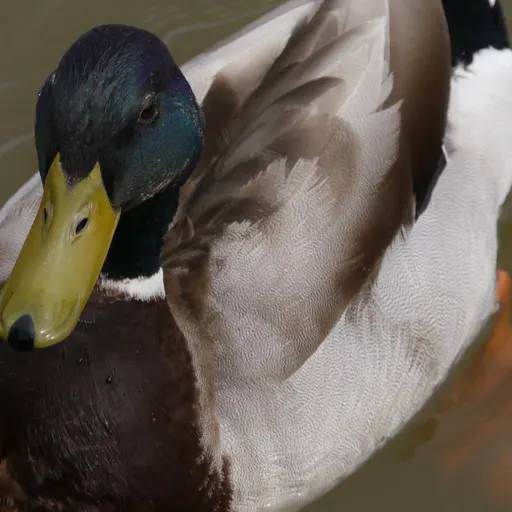
Mallard (Anas platyrhynchos) call
The classic duck's 'quack-quack-quack', loud and descending from the female; drakes give soft, rasping notes.
Listen to the Mallard call
A field recording of the Mallard (Anas platyrhynchos) by Jenn Wren, shared on iNaturalist. Listen for the Mallard in wetland and urban habitats.
Your first course is free, with no ads.
Sounds similar
Birds that sound similar to the Mallard
These birds belong to the duck family, like the Mallard, so their calls can sound alike.
-
Mute Swan Cygnus olor
Mostly quiet; snorts and hisses on the water, and a loud, throbbing hum from its wings in flight.
-
Canada Goose Branta canadensis
A loud, honking 'ah-honk', given in noisy chorus from flocks on park lakes and in flight.
-
Wood Duck Aix sponsa
Females give a rising, squealing oo-eek in flight; males a thin, high, rising whistle.
-
Paradise Shelduck Tadorna variegata
Maori: putangitangi. The female's high zeek-zeek against the male's deep honk.
-
Black Swan Cygnus atratus
A far-carrying musical bugle, often from a flock on the water.
Questions
Questions about the Mallard
What does the Mallard sound like?
The classic duck's 'quack-quack-quack', loud and descending from the female; drakes give soft, rasping notes. Listen to the recording above.
Which birds sound like the Mallard?
Mute Swan, Canada Goose, Wood Duck, Paradise Shelduck and Black Swan sound similar.
Where can I hear the Mallard?
SongLark teaches it in two courses: Birds of England and Birds of Eastern North America.
How can I learn the Mallard call?
In SongLark's Birds of England course, it comes in Level 6: Water & Coast. SongLark teaches it by ear with real field recordings.
Courses
Learn this call in
SongLark teaches the Mallard in two courses: Birds of England and Birds of Eastern North America. Each course plays real field recordings and brings every bird back for review just before you would forget it.
- In Birds of England, the Mallard comes in Level 6: Water & Coast. That Level is about park lakes, rivers and the seashore.
- In Birds of Eastern North America, the Mallard comes in Level 5: Lakes, Marsh & Shore. That Level is about cattails, ponds and big lakes.
Learn it with these birds in Level 6 of Birds of England
-
Eurasian Coot Fulica atra
A sharp, explosive 'kowk' or 'pik'; a black waterbird with a white face shield.
-
Grey Heron Ardea cinerea
A harsh, croaking 'fraaank!', usually in flight; a tall grey bird standing still in shallow water.
-
Little Grebe Tachybaptus ruficollis
A loud, whinnying trill, like a horse laughing, from a small dumpy bird on ponds and slow rivers.
-
Black-headed Gull Chroicocephalus ridibundus
A harsh, screeching 'kraaar' from noisy flocks on lakes, fields and coasts.
-
European Herring Gull Larus argentatus
The seaside's loud, laughing 'kyow-kyow-kyow' and long calls, now also on town rooftops.
-
Eurasian Oystercatcher Haematopus ostralegus
A loud, piercing 'kleep-kleep-kleep', often in excited piping duets along the shore.
-
Eurasian Curlew Numenius arquata
A rising, bubbling 'cour-lee' that gives it its name, haunting over moors and estuaries.
Get SongLark
Learn Mallard in SongLark
Install SongLark, sign in, and choose a course that teaches the Mallard.
- Your first course is free. When you first sign in, you choose one course to keep.
- On iPhone? SongLark is coming soon to the App Store.
- One account, every device. Your progress syncs between devices.