 SongLark
Australia
Learn the bird calls of Southeast Queensland.
SongLark teaches you to name 48 birds of Southeast Queensland by ear. Each lesson takes about three minutes and uses real field recordings, and every bird comes back for review just before you would forget it.
Your first course is free, with no ads. On iPhone, sign in to the web app in Safari.
The course
The 48 birds of Southeast Queensland you will learn
The course starts with the birds you hear every day and works outwards, level by level. Each lesson introduces three or four of these birds by their calls.
Level 1: Brisbane Backyards
The birds you hear every day. 9 birds, 4 lessons.
-
Australian Magpie Gymnorhina tibicen
Fluty, warbling phrases; often daytime chorus.
-
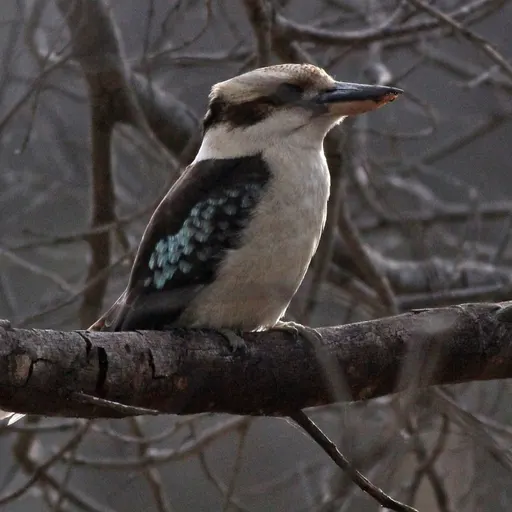
Laughing Kookaburra Dacelo novaeguineae
Famous rolling laughter, often in groups.
-
Rainbow Lorikeet Trichoglossus moluccanus
Continuous screeching chatter, very loud in flocks.
-
Willie Wagtail Rhipidura leucophrys
Scolding 'chit-chit' and sweet descending song at dawn.
-
Noisy Miner Manorina melanocephala
Sharp 'pwee' alarm pips and constant chatter in colonies.
-
Common Myna Acridotheres tristis
Bubbling, chattering medley of squawks and gurgles.
-
Australasian Figbird Sphecotheres vieilloti
Loud cheerful descending whistles and chatter.
-
Torresian Crow Corvus orru
Flat, nasal 'ark-ark-ark' bursts trailing off at the end.
-
Magpie-lark Grallina cyanoleuca
Loud, repeated 'pee-o-wit' often in duet.
Level 2: Subtropical Parrots
Loud, colourful and hard to miss. 8 birds, 4 lessons.
-
Galah Eolophus roseicapilla
High-pitched 'chi-chi' screeches, often from flocks.
-
Sulphur-crested Cockatoo Cacatua galerita
Raucous, harsh screeching that carries a long way.
-
Little Corella Cacatua sanguinea
Raucous, screeching, quavering flock calls.
-
Pale-headed Rosella Platycercus adscitus
Sharp 'pink-pink' contact notes and chattering.
-
Yellow-tailed Black-Cockatoo Zanda funerea
Mournful, drawn-out 'kee-ow' wails from passing flocks.
-
Australian King Parrot Alisterus scapularis
Shrill, ringing 'crassik-crassik' in flight.
-
Crimson Rosella Platycercus elegans
Mellow bell-like piping and chattering contact calls.
-
Pacific Koel Eudynamys orientalis
Persistent, rising 'koo-el' heard through summer nights.
Level 3: Honeyeaters & Friarbirds
Nectar-lovers with big voices. 9 birds, 4 lessons.
-
Red Wattlebird Anthochaera carunculata
Harsh, coughing 'yak-a-yak' and raucous chacking.
-
Little Wattlebird Anthochaera chrysoptera
Raucous, grating 'fetch-the-gun' and cackling calls.
-
Blue-faced Honeyeater Entomyzon cyanotis
Loud, harsh 'ki-owk' calls.
-
Noisy Friarbird Philemon corniculatus
Raucous cackling 'four-o'clock' and metallic squawks.
-
Little Friarbird Philemon citreogularis
Rollicking chatter, softer than the Noisy Friarbird.
-
New Holland Honeyeater Phylidonyris novaehollandiae
Busy, chittering twitter with sharp metallic notes.
-
Lewin's Honeyeater Meliphaga lewinii
Staccato machine-gun-like rattle.
-
Eastern Spinebill Acanthorhynchus tenuirostris
Rapid, high-pitched piping trill; whirring wingbeats.
-
Bell Miner Manorina melanophrys
Single, bell-like 'ting' notes, endlessly repeated across the colony.
Level 4: Small Bush Birds
Fairywrens, fantails and tiny voices. 8 birds, 4 lessons.
-
Superb Fairywren Malurus cyaneus
High, tinkling trills; often in scrubby habitats.
-
Red-backed Fairywren Malurus melanocephalus
High reeling trill.
-
Red-browed Finch Neochmia temporalis
High, thin 'sssit' contact calls from busy flocks.
-
Grey Fantail Rhipidura albiscapa
Thin, tinkling, ascending sequence of high notes.
-
Silvereye Zosterops lateralis
Warbling, tinkling song and thin 'tsee' contact calls.
-
Spotted Pardalote Pardalotus punctatus
Repeated, soft, far-carrying 'sleep-may-bee' whistle.
-
Striated Pardalote Pardalotus striatus
Insistent repeated 'pick-it-up' double or triple notes.
-
Brown Thornbill Acanthiza pusilla
Rich musical warble with harsh churrs; a mimic.
Level 5: Rainforest Songsters
Voices of the hinterland forests. 9 birds, 4 lessons.
-
Eastern Yellow Robin Eopsaltria australis
Soft, piping 'chop-chop' and pre-dawn piping song.
-
Eastern Whipbird Psophodes olivaceus
Explosive whip-crack answered by a sharp 'choo-choo'.
-
Grey Shrikethrush Colluricincla harmonica
Mellow, musical piping phrases.
-
Golden Whistler Pachycephala pectoralis
Rich rising whistles ending in a sharp whip-crack.
-
Rufous Whistler Pachycephala rufiventris
Ringing, joyful 'ee-chong' whistles in bursts.
-
White-throated Treecreeper Cormobates leucophaea
Piercing, evenly-spaced piping notes up a trunk.
-
Black-faced Monarch Monarcha melanopsis
Rich, mellow 'why-you which-you' whistles.
-
Noisy Pitta Pitta versicolor
Distinctive 'walk-to-work' three-note whistle from the forest floor.
-
Satin Bowerbird Ptilonorhynchus violaceus
Wheezy, buzzing, mechanical notes and mimicry.
Level 6: Water, Skies & Night
Wetlands, migrants and the bush after dark. 5 birds, 3 lessons.
-
Australian White Ibis Threskiornis molucca
Mostly silent; low croaks and grunts at colonies.
-
Dollarbird Eurystomus orientalis
Harsh cackling 'kak-kak-kak' in flight, often at dusk.
-
Channel-billed Cuckoo Scythrops novaehollandiae
Loud, raucous 'awk awk' given in flight.
-
Bush Stone-curlew Burhinus grallarius
Eerie, drawn-out wailing 'wee-loo' screams at night.
-
Tawny Frogmouth Podargus strigoides
Low, repetitive soft 'oom-oom-oom' at night.
How it works
A course, not a soundboard.
Listen and answer
A call plays. You pick the bird. New species are mixed with the ones you have already met, so the answers never come from elimination.
Review at the right time
Every bird you meet gets a review date. Get one right and it slides further away; miss it and it comes back tomorrow.
Hear it outside
Three minutes a day is the whole commitment. Ten lessons in, you will pick calls out of the dawn chorus in Southeast Queensland.
Get SongLark
Start learning the birds of Southeast Queensland today
Install SongLark, sign in, and choose Birds of Southeast QLD as your course. Not on Android? The same app runs in your browser.
- On Android? Install it from Google Play and sign in with Google.
- On iPhone? Open the web app in Safari and sign in. Add it to your home screen and it opens like any other app.
- One account, every device. Your progress syncs, so you can switch between your phone and your browser.
Questions
Frequently asked
Which birds does the Southeast Queensland course teach?
48 birds of Southeast Queensland, in six levels: Brisbane Backyards, Subtropical Parrots, Honeyeaters & Friarbirds, Small Bush Birds, Rainforest Songsters and Water, Skies & Night. It starts with Australian Magpie, Laughing Kookaburra and Rainbow Lorikeet. The full list is on this page.
Is the course free?
Yes, your first course is free and there are no ads. When you first sign in, you choose one course to keep. Choose Southeast Queensland.
Do I need to know anything about birds already?
No. The course starts with the loudest, most common birds and adds three or four new species per lesson, reviewing earlier ones as you go.
Which phones can run SongLark?
On Android, install SongLark from Google Play. On iPhone, iPad or a computer, sign in to the web app at songlark.app/app. It is the same account, so your progress follows you between devices.
Does SongLark identify a bird I record myself?
No. That is the opposite of what SongLark does. Rather than having an app name the bird for you, SongLark trains your own ear so you can name it yourself.
How long does a lesson take?
About three minutes. A lesson opens with a short review of the calls you are due to forget, then introduces three or four new birds.
Other regions