 SongLark
New Zealand
Learn the bird calls of New Zealand’s North Island.
SongLark teaches you to name 48 birds of New Zealand’s North Island by ear. Each lesson takes about three minutes and uses real field recordings, and every bird comes back for review just before you would forget it.
Your first course is free, with no ads. On iPhone, sign in to the web app in Safari.
The course
The 48 birds of New Zealand’s North Island you will learn
The course starts with the birds you hear every day and works outwards, level by level. Each lesson introduces three or four of these birds by their calls.
Level 1: Town & Garden
The birds outside every North Island window. 9 birds, 4 lessons.
-
Common Blackbird Turdus merula
Rich, mellow fluting song from an exposed perch; sharp alarm chatter.
-
House Sparrow Passer domesticus
Monotonous cheeping and chirping around buildings.
-
Common Starling Sturnus vulgaris
Rambling whistles, clicks and mimicry from rooftops and wires.
-
Song Thrush Turdus philomelos
Loud ringing phrases, each one repeated two or three times.
-
Silvereye Zosterops lateralis
Warbling, tinkling song and thin 'tsee' contact calls.
-
Welcome Swallow Hirundo neoxena
Twittering chattering warble; sharp 'seet' in flight.
-
Common Myna Acridotheres tristis
Bubbling, chattering medley of squawks and gurgles.
-
Australian Magpie Gymnorhina tibicen
Fluty, warbling phrases; often daytime chorus.
-
Eastern Rosella Platycercus eximius
Bright bell-like 'kwink-kwink' notes and chatter.
Level 2: Native Garden & Bush Edge
The natives that come to the suburbs. 9 birds, 4 lessons.
-
Tui Prosthemadera novaeseelandiae
Maori: tui. Bell notes, clicks and wheezes broken by sudden silent gaps.
-
New Zealand Bellbird Anthornis melanura
Maori: korimako. Clear chiming bell notes in short ringing phrases.
-
New Zealand Fantail Rhipidura fuliginosa
Maori: piwakawaka. Thin squeaky cheet notes given while it flits around you.
-
Grey Warbler Gerygone igata
Maori: riroriro. A long wavering trill from deep cover; the bird is rarely seen.
-
Shining Cuckoo Chrysococcyx lucidus
Maori: pipiwharauroa. Repeated upward-slurred whistles through spring and summer.
-
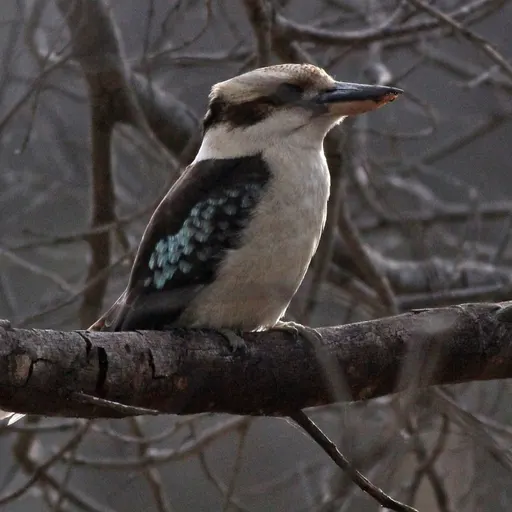
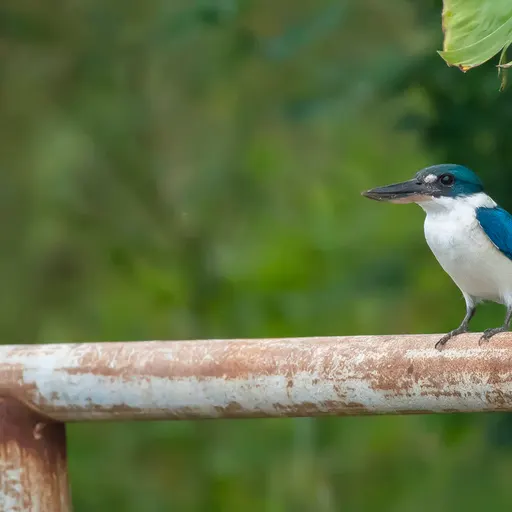
Sacred Kingfisher Todiramphus sanctus
Maori: kotare. A hard staccato kek-kek-kek from a wire or bare branch.
-
New Zealand Pigeon Hemiphaga novaeseelandiae
Maori: kereru. Almost silent; the loud whoosh of its wingbeats gives it away.
-
Red-crowned Parakeet Cyanoramphus novaezelandiae
Maori: kakariki. A rapid chattering ki-ki-ki-ki, often given in flight.
-
Swamp Harrier Circus approximans
Maori: kahu. A thin high kee-a over open country and wetland edges.
Level 3: Deep Forest
Sanctuary birds and the voices of the night. 9 birds, 4 lessons.
-
New Zealand Kaka Nestor meridionalis
Maori: kaka. Harsh grating skraaak calls mixed with musical whistles.
-
Morepork Ninox novaeseelandiae
Maori: ruru. A two-note more-pork call repeated through the night.
-
Long-tailed Cuckoo Urodynamis taitensis
Maori: koekoea. A harsh screeching zzwheesht, often heard at night in summer.
-
Whitehead Mohoua albicilla
Maori: popokotea. Canary-like chattering from noisy family parties.
-
North Island Robin Petroica longipes
Maori: toutouwai. A long loud series of downslurred notes, often at your feet.
-
Tomtit Petroica macrocephala
Maori: miromiro. A short sweet three- or four-note phrase, repeated.
-
North Island Kokako Callaeas wilsoni
Maori: kokako. Slow mournful organ-like notes that carry far through the forest.
-
North Island Saddleback Philesturnus rufusater
Maori: tieke. A loud rhythmic chattering ki-ki-ki-ti-hi-hi.
-
Stitchbird Notiomystis cincta
Maori: hihi. A sharp tzit stitch note among thin whistles.
Level 4: Farmland & Open Country
Hedgerow finches, paddocks and fenceposts. 9 birds, 4 lessons.
-
Common Chaffinch Fringilla coelebs
A short accelerating rattle that ends in a flourish.
-
European Goldfinch Carduelis carduelis
Liquid tinkling twitters, usually given in flight.
-
European Greenfinch Chloris chloris
A long wheezy dzweee among canary-like twitters.
-
Eurasian Skylark Alauda arvensis
An unbroken bubbling song delivered high overhead.
-
Yellowhammer Emberiza citrinella
A dry repeated phrase that ends on one long thin note.
-
Dunnock Prunella modularis
A short even slightly scratchy warble from low cover.
-
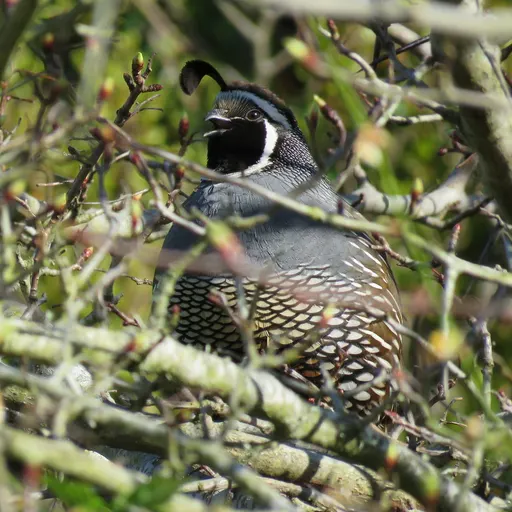
California Quail Callipepla californica
A ringing three-note chi-ca-go from a fencepost.
-
Ring-necked Pheasant Phasianus colchicus
An explosive double croak followed by whirring wingbeats.
-
Masked Lapwing Vanellus miles
Loud staccato 'kekekek' alarm, day or night.
Level 5: Wetland & Freshwater
Lake edges, raupo and the birds hidden in them. 5 birds, 3 lessons.
-
Australasian Swamphen Porphyrio melanotus
Maori: pukeko. Loud harsh screeches and nasal shrieks from wetland edges.
-
Spotless Crake Zapornia tabuensis
Maori: puweto. A sharp book-book and a purring roll from dense raupo.
-
Paradise Shelduck Tadorna variegata
Maori: putangitangi. The female's high zeek-zeek against the male's deep honk.
-
Black Swan Cygnus atratus
A far-carrying musical bugle, often from a flock on the water.
-
New Zealand Scaup Aythya novaeseelandiae
Maori: papango. A soft whistle from the male; otherwise near silent.
Level 6: Coast & Icons
Beaches, estuaries and the birds on the banknotes. 7 birds, 4 lessons.
-
Red-billed Gull Chroicocephalus scopulinus
Maori: tarapunga. A raucous scolding kraah around beaches and car parks.
-
Southern Black-backed Gull Larus dominicanus
Maori: karoro. A loud laughing yodel and deep barking notes.
-
White-fronted Tern Sterna striata
Maori: tara. A high grating siet given over the surf.
-
Variable Oystercatcher Haematopus unicolor
Maori: torea pango. A shrill piping kleep repeated in alarm.
-
Weka Gallirallus australis
Maori: weka. A repeated far-carrying coo-eet, often as a duet after dark.
-
North Island Brown Kiwi Apteryx mantelli
Maori: kiwi-nui. The male's long ascending whistle answered by the female's hoarse cry.
-
New Zealand Falcon Falco novaeseelandiae
Maori: karearea. A rapid insistent kek-kek-kek in attack.
How it works
A course, not a soundboard.
Listen and answer
A call plays. You pick the bird. New species are mixed with the ones you have already met, so the answers never come from elimination.
Review at the right time
Every bird you meet gets a review date. Get one right and it slides further away; miss it and it comes back tomorrow.
Hear it outside
Three minutes a day is the whole commitment. Ten lessons in, you will pick calls out of the dawn chorus in New Zealand’s North Island.
Get SongLark
Start learning the birds of New Zealand’s North Island today
Install SongLark, sign in, and choose Birds of the North Island as your course. Not on Android? The same app runs in your browser.
- On Android? Install it from Google Play and sign in with Google.
- On iPhone? Open the web app in Safari and sign in. Add it to your home screen and it opens like any other app.
- One account, every device. Your progress syncs, so you can switch between your phone and your browser.
Questions
Frequently asked
Which birds does the New Zealand’s North Island course teach?
48 birds of New Zealand’s North Island, in six levels: Town & Garden, Native Garden & Bush Edge, Deep Forest, Farmland & Open Country, Wetland & Freshwater and Coast & Icons. It starts with Common Blackbird, House Sparrow and Common Starling. The full list is on this page.
Is the course free?
Yes, your first course is free and there are no ads. When you first sign in, you choose one course to keep. Choose New Zealand’s North Island.
Do I need to know anything about birds already?
No. The course starts with the loudest, most common birds and adds three or four new species per lesson, reviewing earlier ones as you go.
Which phones can run SongLark?
On Android, install SongLark from Google Play. On iPhone, iPad or a computer, sign in to the web app at songlark.app/app. It is the same account, so your progress follows you between devices.
Does SongLark identify a bird I record myself?
No. That is the opposite of what SongLark does. Rather than having an app name the bird for you, SongLark trains your own ear so you can name it yourself.
How long does a lesson take?
About three minutes. A lesson opens with a short review of the calls you are due to forget, then introduces three or four new birds.
Other regions